Skip to content
Peace Cat Games

Quiver Quest

Choose a quiver

Mutate green vertices until every vertex is red: that is a maximal green sequence. Everything you try stays in your browser until you choose to submit. New here? Take the tutorial, or start with A₂.

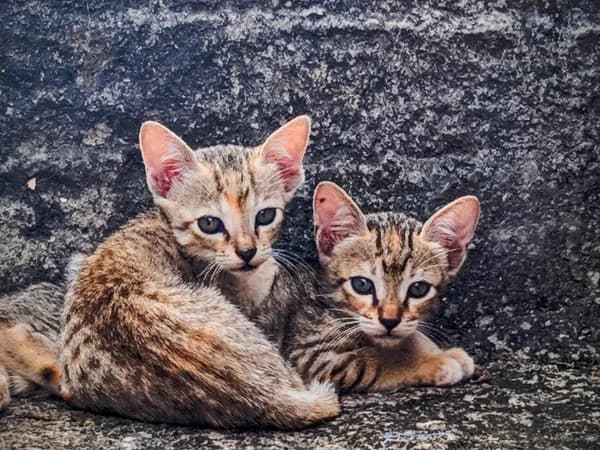
Two spotted tabby kittens with blue eyes snuggled together against a grey stone wall.
Photo by Abhishekgowda28, CC0 1.0

Dynkin mode

Curious Kitten

Finite type. Every quiver here has a certified total, so you can see exactly how many sequences there are to find.

  • A₂

    type A₂ · 2 vertices

    Arrows: 1 → 2

    Two vertices, one arrow. The smallest place to learn what a mutation does.

    Enumeration complete and certified

    Exactly 2 maximal green sequences. Brüstle–Dupont–Pérotin's Lemma 5.1 states that A₂ has exactly two, of lengths 2 and 3. The engine's complete walk of the exchange graph agrees.

    Lengths
    Number of maximal green sequences of each length
    LengthMGS
    21
    31

    Known facts

    • Proved: finitely many MGS, as for every quiver of finite (Dynkin) type. (Brüstle–Dupont–Pérotin 2014, Theorem 4.1)
    • It has exactly two MGS, of lengths 2 and 3. (Brüstle–Dupont–Pérotin 2014, Lemma 5.1)
    • The shortest MGS have length 2, the number of vertices: mutating sources one at a time always works. (Brüstle–Dupont–Pérotin 2014, Lemma 2.20)
    • The longest MGS have length 3, the number of positive roots. (Brüstle–Dupont–Pérotin 2014, Theorem 4.4)
    Full references
    • T. Brüstle, G. Dupont, M. Pérotin, On maximal green sequences, IMRN 2014(16) 4547–4586, doi:10.1093/imrn/rnt075, arXiv:1205.2050, Theorem 4.1
    • T. Brüstle, G. Dupont, M. Pérotin, On maximal green sequences, IMRN 2014(16) 4547–4586, doi:10.1093/imrn/rnt075, arXiv:1205.2050, Lemma 5.1
    • T. Brüstle, G. Dupont, M. Pérotin, On maximal green sequences, IMRN 2014(16) 4547–4586, doi:10.1093/imrn/rnt075, arXiv:1205.2050, Lemma 2.20
    • T. Brüstle, G. Dupont, M. Pérotin, On maximal green sequences, IMRN 2014(16) 4547–4586, doi:10.1093/imrn/rnt075, arXiv:1205.2050, Theorem 4.4
    Explore A₂
  • A₃, in a line

    type A₃ · 3 vertices

    Arrows: 1 → 2, 2 → 3

    Three vertices in a row, every arrow pointing the same way.

    Enumeration complete and certified

    Exactly 9 maximal green sequences. Brüstle–Dupont–Pérotin's tables (arXiv:1205.2050v1, Appendix B, Figure 22) give 9 for this quiver, with these lengths. The engine's complete walk of the exchange graph agrees.

    Lengths
    Number of maximal green sequences of each length
    LengthMGS
    31
    44
    52
    62

    Known facts

    • Proved: finitely many MGS, as for every quiver of finite (Dynkin) type. (Brüstle–Dupont–Pérotin 2014, Theorem 4.1)
    • The shortest MGS have length 3, the number of vertices: mutating sources one at a time always works. (Brüstle–Dupont–Pérotin 2014, Lemma 2.20)
    • The longest MGS have length 6, the number of positive roots. (Brüstle–Dupont–Pérotin 2014, Theorem 4.4)
    Full references
    • T. Brüstle, G. Dupont, M. Pérotin, On maximal green sequences, IMRN 2014(16) 4547–4586, doi:10.1093/imrn/rnt075, arXiv:1205.2050, Theorem 4.1
    • T. Brüstle, G. Dupont, M. Pérotin, On maximal green sequences, IMRN 2014(16) 4547–4586, doi:10.1093/imrn/rnt075, arXiv:1205.2050, Lemma 2.20
    • T. Brüstle, G. Dupont, M. Pérotin, On maximal green sequences, IMRN 2014(16) 4547–4586, doi:10.1093/imrn/rnt075, arXiv:1205.2050, Theorem 4.4
    Explore A₃, in a line
  • A₃, a sink in the middle

    type A₃ · 3 vertices

    Arrows: 1 → 2, 3 → 2

    The same graph as before, but both arrows point inward. Does the orientation matter?

    Enumeration complete and certified

    Exactly 10 maximal green sequences. Brüstle–Dupont–Pérotin's tables (arXiv:1205.2050v1, Appendix B, Figure 22) give 10 for this quiver, with these lengths. The engine's complete walk of the exchange graph agrees.

    Lengths
    Number of maximal green sequences of each length
    LengthMGS
    32
    42
    52
    64

    Known facts

    • Proved: finitely many MGS, as for every quiver of finite (Dynkin) type. (Brüstle–Dupont–Pérotin 2014, Theorem 4.1)
    • The shortest MGS have length 3, the number of vertices: mutating sources one at a time always works. (Brüstle–Dupont–Pérotin 2014, Lemma 2.20)
    • The longest MGS have length 6, the number of positive roots. (Brüstle–Dupont–Pérotin 2014, Theorem 4.4)
    Full references
    • T. Brüstle, G. Dupont, M. Pérotin, On maximal green sequences, IMRN 2014(16) 4547–4586, doi:10.1093/imrn/rnt075, arXiv:1205.2050, Theorem 4.1
    • T. Brüstle, G. Dupont, M. Pérotin, On maximal green sequences, IMRN 2014(16) 4547–4586, doi:10.1093/imrn/rnt075, arXiv:1205.2050, Lemma 2.20
    • T. Brüstle, G. Dupont, M. Pérotin, On maximal green sequences, IMRN 2014(16) 4547–4586, doi:10.1093/imrn/rnt075, arXiv:1205.2050, Theorem 4.4
    Explore A₃, a sink in the middle
  • A₄, in a line

    type A₄ · 4 vertices

    Arrows: 1 → 2, 2 → 3, 3 → 4

    One vertex longer.

    Enumeration complete and certified

    Exactly 98 maximal green sequences. Brüstle–Dupont–Pérotin's tables (arXiv:1205.2050v1, Appendix B, Figure 23) give 98 for this quiver, with these lengths. The engine's complete walk of the exchange graph agrees.

    Lengths
    Number of maximal green sequences of each length
    LengthMGS
    41
    510
    622
    722
    818
    913
    1012

    Known facts

    • Proved: finitely many MGS, as for every quiver of finite (Dynkin) type. (Brüstle–Dupont–Pérotin 2014, Theorem 4.1)
    • The shortest MGS have length 4, the number of vertices: mutating sources one at a time always works. (Brüstle–Dupont–Pérotin 2014, Lemma 2.20)
    • The longest MGS have length 10, the number of positive roots. (Brüstle–Dupont–Pérotin 2014, Theorem 4.4)
    Full references
    • T. Brüstle, G. Dupont, M. Pérotin, On maximal green sequences, IMRN 2014(16) 4547–4586, doi:10.1093/imrn/rnt075, arXiv:1205.2050, Theorem 4.1
    • T. Brüstle, G. Dupont, M. Pérotin, On maximal green sequences, IMRN 2014(16) 4547–4586, doi:10.1093/imrn/rnt075, arXiv:1205.2050, Lemma 2.20
    • T. Brüstle, G. Dupont, M. Pérotin, On maximal green sequences, IMRN 2014(16) 4547–4586, doi:10.1093/imrn/rnt075, arXiv:1205.2050, Theorem 4.4
    Explore A₄, in a line
  • D₄

    type D₄ · 4 vertices

    Arrows: 1 → 2, 3 → 2, 4 → 2

    Three arms meeting at a centre.

    Enumeration complete and certified

    Exactly 468 maximal green sequences. Brüstle–Dupont–Pérotin's tables (arXiv:1205.2050v1, Appendix B, Figure 25) give 468, with these lengths, for the opposite orientation, arrows out of the centre; their Proposition 2.15 matches the MGS of a quiver with those of its opposite, length for length. The engine's complete walk of the exchange graph on this orientation agrees.

    Lengths
    Number of maximal green sequences of each length
    LengthMGS
    46
    56
    66
    718
    824
    924
    1024
    11144
    12216

    Known facts

    • Proved: finitely many MGS, as for every quiver of finite (Dynkin) type. (Brüstle–Dupont–Pérotin 2014, Theorem 4.1)
    • The shortest MGS have length 4, the number of vertices: mutating sources one at a time always works. (Brüstle–Dupont–Pérotin 2014, Lemma 2.20)
    • The longest MGS have length 12, the number of positive roots. (Brüstle–Dupont–Pérotin 2014, Theorem 4.4)
    Full references
    • T. Brüstle, G. Dupont, M. Pérotin, On maximal green sequences, IMRN 2014(16) 4547–4586, doi:10.1093/imrn/rnt075, arXiv:1205.2050, Theorem 4.1
    • T. Brüstle, G. Dupont, M. Pérotin, On maximal green sequences, IMRN 2014(16) 4547–4586, doi:10.1093/imrn/rnt075, arXiv:1205.2050, Lemma 2.20
    • T. Brüstle, G. Dupont, M. Pérotin, On maximal green sequences, IMRN 2014(16) 4547–4586, doi:10.1093/imrn/rnt075, arXiv:1205.2050, Theorem 4.4
    Explore D₄
  • A₅, zigzag

    type A₅ · 5 vertices

    Arrows: 1 → 2, 3 → 2, 3 → 4, 5 → 4

    Arrows alternating direction along a line of five.

    Enumeration complete and certified

    Exactly 19,438 maximal green sequences. Not in Brüstle–Dupont–Pérotin's tables, which list linear A₅. The engine's complete walk of the exchange graph gives this count, and listing all 19,438 sequences one by one gives the same.

    Lengths
    Number of maximal green sequences of each length
    LengthMGS
    516
    638
    772
    8134
    9200
    10376
    11780
    121,644
    133,406
    144,876
    157,896

    Known facts

    • Proved: finitely many MGS, as for every quiver of finite (Dynkin) type. (Brüstle–Dupont–Pérotin 2014, Theorem 4.1)
    • The shortest MGS have length 5, the number of vertices: mutating sources one at a time always works. (Brüstle–Dupont–Pérotin 2014, Lemma 2.20)
    • The longest MGS have length 15, the number of positive roots. (Brüstle–Dupont–Pérotin 2014, Theorem 4.4)
    Full references
    • T. Brüstle, G. Dupont, M. Pérotin, On maximal green sequences, IMRN 2014(16) 4547–4586, doi:10.1093/imrn/rnt075, arXiv:1205.2050, Theorem 4.1
    • T. Brüstle, G. Dupont, M. Pérotin, On maximal green sequences, IMRN 2014(16) 4547–4586, doi:10.1093/imrn/rnt075, arXiv:1205.2050, Lemma 2.20
    • T. Brüstle, G. Dupont, M. Pérotin, On maximal green sequences, IMRN 2014(16) 4547–4586, doi:10.1093/imrn/rnt075, arXiv:1205.2050, Theorem 4.4
    Explore A₅, zigzag
  • D₅

    type D₅ · 5 vertices

    Arrows: 1 → 2, 2 → 3, 4 → 3, 5 → 3

    A longer arm on the D shape.

    Enumeration complete and certified

    Exactly 435,864 maximal green sequences. Not in Brüstle–Dupont–Pérotin's tables. From the engine's complete walk of the exchange graph alone, the method that reproduces Brüstle–Dupont–Pérotin's published counts for the A₃, A₄ and D₄ classes, linear A₅ and A₆, E₆ and E₇.

    Lengths
    Number of maximal green sequences of each length
    LengthMGS
    512
    646
    752
    892
    9206
    10310
    11546
    121,178
    132,326
    143,696
    156,684
    1610,772
    1730,700
    1887,212
    19153,216
    20138,816

    Known facts

    • Proved: finitely many MGS, as for every quiver of finite (Dynkin) type. (Brüstle–Dupont–Pérotin 2014, Theorem 4.1)
    • The shortest MGS have length 5, the number of vertices: mutating sources one at a time always works. (Brüstle–Dupont–Pérotin 2014, Lemma 2.20)
    • The longest MGS have length 20, the number of positive roots. (Brüstle–Dupont–Pérotin 2014, Theorem 4.4)
    Full references
    • T. Brüstle, G. Dupont, M. Pérotin, On maximal green sequences, IMRN 2014(16) 4547–4586, doi:10.1093/imrn/rnt075, arXiv:1205.2050, Theorem 4.1
    • T. Brüstle, G. Dupont, M. Pérotin, On maximal green sequences, IMRN 2014(16) 4547–4586, doi:10.1093/imrn/rnt075, arXiv:1205.2050, Lemma 2.20
    • T. Brüstle, G. Dupont, M. Pérotin, On maximal green sequences, IMRN 2014(16) 4547–4586, doi:10.1093/imrn/rnt075, arXiv:1205.2050, Theorem 4.4
    Explore D₅
  • E₆

    type E₆ · 6 vertices

    Arrows: 1 → 2, 2 → 3, 4 → 3, 5 → 4, 6 → 3

    The first exceptional type. The largest Dynkin quiver here.

    Enumeration complete and certified

    Exactly 2,929,361,906,674 maximal green sequences. Not in Brüstle–Dupont–Pérotin's tables: their E₆ count, 253,085,705,387, is for a different orientation. From the engine's complete walk of the exchange graph alone, the method that reproduces Brüstle–Dupont–Pérotin's published counts for the A₃, A₄ and D₄ classes, linear A₅ and A₆, E₆ and E₇.

    Lengths
    Number of maximal green sequences of each length
    LengthMGS
    630
    7216
    8606
    9810
    101,662
    113,550
    127,288
    1315,996
    1432,436
    1569,716
    16143,020
    17293,598
    18673,070
    191,759,942
    204,414,466
    219,827,664
    2219,761,982
    2340,966,380
    2497,521,134
    25244,062,414
    26621,621,704
    271,667,371,918
    284,688,376,182
    2913,049,807,538
    3036,829,941,184
    31102,212,006,280
    32257,239,709,472
    33518,397,612,352
    34777,288,110,144
    35778,731,443,520
    36438,216,350,400

    Known facts

    • Proved: finitely many MGS, as for every quiver of finite (Dynkin) type. (Brüstle–Dupont–Pérotin 2014, Theorem 4.1)
    • The shortest MGS have length 6, the number of vertices: mutating sources one at a time always works. (Brüstle–Dupont–Pérotin 2014, Lemma 2.20)
    • The longest MGS have length 36, the number of positive roots. (Brüstle–Dupont–Pérotin 2014, Theorem 4.4)
    Full references
    • T. Brüstle, G. Dupont, M. Pérotin, On maximal green sequences, IMRN 2014(16) 4547–4586, doi:10.1093/imrn/rnt075, arXiv:1205.2050, Theorem 4.1
    • T. Brüstle, G. Dupont, M. Pérotin, On maximal green sequences, IMRN 2014(16) 4547–4586, doi:10.1093/imrn/rnt075, arXiv:1205.2050, Lemma 2.20
    • T. Brüstle, G. Dupont, M. Pérotin, On maximal green sequences, IMRN 2014(16) 4547–4586, doi:10.1093/imrn/rnt075, arXiv:1205.2050, Theorem 4.4
    Explore E₆
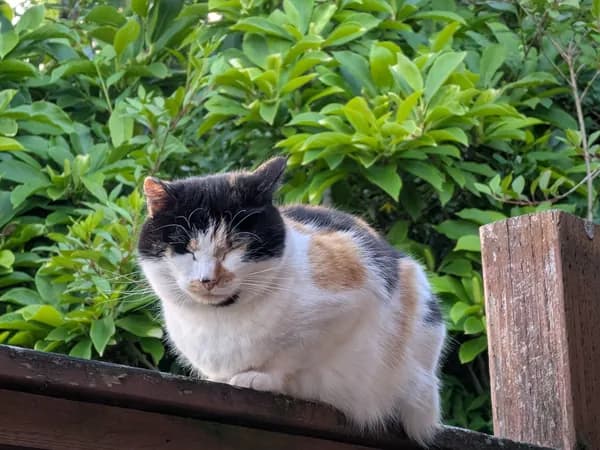
A calico cat sitting on top of a wooden fence in front of a leafy green bush, eyes half closed.
Photo by TechnoKittyCat, CC0 1.0

Tame mode

House Cat

Euclidean type. Finitely many maximal green sequences is a theorem, but for most of these nobody has a complete list.

  • The Kronecker quiver

    type Ã₁ · 2 vertices

    Arrows: 1 → 2 (×2)

    Two vertices and a double arrow. Small, but its representations come in infinite families.

    Enumeration complete and certified

    Exactly 1 maximal green sequence. Brüstle–Dupont–Pérotin's Lemma 5.1 states exactly one. The engine's complete walk of the exchange graph, skipping only the mutations Brüstle–Hermes–Igusa–Todorov's Corollary 3.3.2 rules out, agrees; without the theorem the walk does not finish.

    Lengths
    Number of maximal green sequences of each length
    LengthMGS
    21

    Known facts

    • Proved: finitely many MGS, as for every acyclic Euclidean quiver. (Brüstle–Dupont–Pérotin 2014, Theorem 5.2)
    • It has exactly one MGS, of length 2. (Brüstle–Dupont–Pérotin 2014, Lemma 5.1)
    • The shortest MGS have length 2, the number of vertices: mutating sources one at a time always works. (Brüstle–Dupont–Pérotin 2014, Lemma 2.20)
    • Every MGS mutates 1 for the first time before it first mutates 2, because of the 2 arrows 1 → 2. (In this game's convention; see Known Results.) (Brüstle–Hermes–Igusa–Todorov 2017, Corollary 3.3.4)
    • Igusa and Zhou's results on multiple edges apply too. Their paper is an unrefereed preprint, so the game shows them but never relies on them. (Igusa–Zhou 2019, Theorems 3.12–3.13 (unrefereed preprint))
    Full references
    • T. Brüstle, G. Dupont, M. Pérotin, On maximal green sequences, IMRN 2014(16) 4547–4586, doi:10.1093/imrn/rnt075, arXiv:1205.2050, Theorem 5.2
    • T. Brüstle, G. Dupont, M. Pérotin, On maximal green sequences, IMRN 2014(16) 4547–4586, doi:10.1093/imrn/rnt075, arXiv:1205.2050, Lemma 5.1
    • T. Brüstle, G. Dupont, M. Pérotin, On maximal green sequences, IMRN 2014(16) 4547–4586, doi:10.1093/imrn/rnt075, arXiv:1205.2050, Lemma 2.20
    • T. Brüstle, S. Hermes, K. Igusa, G. Todorov, Semi-invariant pictures and two conjectures on maximal green sequences, J. Algebra 473 (2017) 80–109, doi:10.1016/j.jalgebra.2016.10.025, arXiv:1503.07945, Corollary 3.3.4
    • K. Igusa, Y. Zhou, Maximal green sequences of quivers with multiple edges, arXiv:1902.07375v1 (2019), preprint, no journal version found, Theorems 3.12–3.13, Corollary 3.14
    Explore The Kronecker quiver
  • Ã₂, an acyclic triangle

    type Ã₂ · 3 vertices

    Arrows: 1 → 2, 2 → 3, 1 → 3

    A triangle whose arrows never go all the way round.

    Finiteness proved

    The total is finite, but not known: nobody has a certified complete list.

    Known facts

    • Proved: finitely many MGS, as for every acyclic Euclidean quiver. (Brüstle–Dupont–Pérotin 2014, Theorem 5.2)
    • The shortest MGS have length 3, the number of vertices: mutating sources one at a time always works. (Brüstle–Dupont–Pérotin 2014, Lemma 2.20)
    • The proof of finiteness gives no upper bound on the length of an MGS, and the game knows of none. (Brüstle–Dupont–Pérotin 2014, Theorem 5.2)
    Full references
    • T. Brüstle, G. Dupont, M. Pérotin, On maximal green sequences, IMRN 2014(16) 4547–4586, doi:10.1093/imrn/rnt075, arXiv:1205.2050, Theorem 5.2
    • T. Brüstle, G. Dupont, M. Pérotin, On maximal green sequences, IMRN 2014(16) 4547–4586, doi:10.1093/imrn/rnt075, arXiv:1205.2050, Lemma 2.20
    Explore Ã₂, an acyclic triangle
  • Ã₃, a square

    type Ã₃ · 4 vertices

    Arrows: 1 → 2, 2 → 3, 1 → 4, 4 → 3

    Two paths from vertex 1 to vertex 3.

    Finiteness proved

    The total is finite, but not known: nobody has a certified complete list.

    Known facts

    • Proved: finitely many MGS, as for every acyclic Euclidean quiver. (Brüstle–Dupont–Pérotin 2014, Theorem 5.2)
    • The shortest MGS have length 4, the number of vertices: mutating sources one at a time always works. (Brüstle–Dupont–Pérotin 2014, Lemma 2.20)
    • The proof of finiteness gives no upper bound on the length of an MGS, and the game knows of none. (Brüstle–Dupont–Pérotin 2014, Theorem 5.2)
    Full references
    • T. Brüstle, G. Dupont, M. Pérotin, On maximal green sequences, IMRN 2014(16) 4547–4586, doi:10.1093/imrn/rnt075, arXiv:1205.2050, Theorem 5.2
    • T. Brüstle, G. Dupont, M. Pérotin, On maximal green sequences, IMRN 2014(16) 4547–4586, doi:10.1093/imrn/rnt075, arXiv:1205.2050, Lemma 2.20
    Explore Ã₃, a square
  • D̃₄, four arms

    type D̃₄ · 5 vertices

    Arrows: 1 → 5, 2 → 5, 3 → 5, 4 → 5

    A centre with four arms, every arrow pointing in.

    Finiteness proved

    The total is finite, but not known: nobody has a certified complete list.

    Known facts

    • Proved: finitely many MGS, as for every acyclic Euclidean quiver. (Brüstle–Dupont–Pérotin 2014, Theorem 5.2)
    • The shortest MGS have length 5, the number of vertices: mutating sources one at a time always works. (Brüstle–Dupont–Pérotin 2014, Lemma 2.20)
    • The proof of finiteness gives no upper bound on the length of an MGS, and the game knows of none. (Brüstle–Dupont–Pérotin 2014, Theorem 5.2)
    Full references
    • T. Brüstle, G. Dupont, M. Pérotin, On maximal green sequences, IMRN 2014(16) 4547–4586, doi:10.1093/imrn/rnt075, arXiv:1205.2050, Theorem 5.2
    • T. Brüstle, G. Dupont, M. Pérotin, On maximal green sequences, IMRN 2014(16) 4547–4586, doi:10.1093/imrn/rnt075, arXiv:1205.2050, Lemma 2.20
    Explore D̃₄, four arms
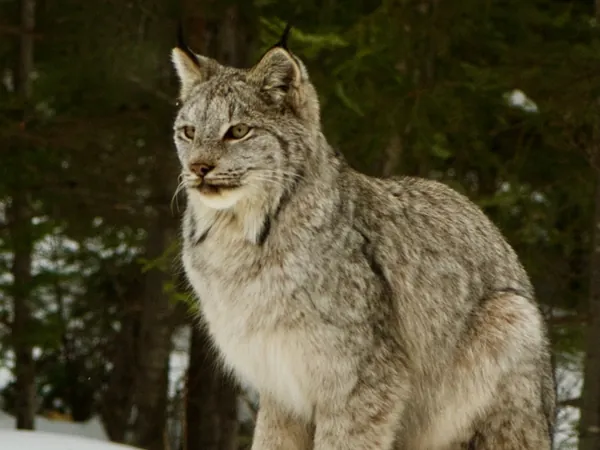
A Canada lynx with a thick grey winter coat sitting in front of dark conifers, with snow on the ground.
Photo by Dominique Bérubé (berdom on iNaturalist), CC0 1.0

Wild mode

Wild Cat Researcher

Wild type, the research laboratory. Most here are almost tame, one vertex beyond a tame quiver. A few small ones have certified totals; for others even finiteness is open. Look for sequences, and for beginnings that can never be finished.

Almost tame: one vertex beyond tame

Each of these is a tame quiver plus one vertex. Delete that vertex and you are back in tame country; delete any vertex and what is left is Dynkin or tame. They are the wild quivers closest to the ones we understand, so a restriction found in tame mode is most likely to survive, or to break interestingly, here.

  • 1 ⇉ 2 → 3

    wild type · 3 vertices

    Arrows: 1 → 2 (×2), 2 → 3

    A double arrow followed by a single one: the game's worked example of a proved ban. See Known Results.

    Enumeration complete and certified

    Exactly 3 maximal green sequences. The engine's complete walk of the exchange graph, skipping only the mutations Brüstle–Hermes–Igusa–Todorov's Corollary 3.3.2 rules out, finds exactly three. Igusa–Zhou's Theorem 3.13 (an unrefereed preprint) predicts the same three; see Known Results.

    Lengths
    Number of maximal green sequences of each length
    LengthMGS
    31
    42

    Known facts

    • Proved: finitely many MGS, as for every acyclic quiver with three vertices. (Brüstle–Dupont–Pérotin 2014, Theorem 5.4)
    • The shortest MGS have length 3, the number of vertices: mutating sources one at a time always works. (Brüstle–Dupont–Pérotin 2014, Lemma 2.20)
    • No theorem the game applies bounds the length of an MGS from above.
    • Every MGS mutates 1 for the first time before it first mutates 2, because of the 2 arrows 1 → 2. (In this game's convention; see Known Results.) (Brüstle–Hermes–Igusa–Todorov 2017, Corollary 3.3.4)
    • Igusa and Zhou's results on multiple edges apply too. Their paper is an unrefereed preprint, so the game shows them but never relies on them. (Igusa–Zhou 2019, Theorems 3.12–3.13 (unrefereed preprint))
    Full references
    • T. Brüstle, G. Dupont, M. Pérotin, On maximal green sequences, IMRN 2014(16) 4547–4586, doi:10.1093/imrn/rnt075, arXiv:1205.2050, Theorem 5.4
    • T. Brüstle, G. Dupont, M. Pérotin, On maximal green sequences, IMRN 2014(16) 4547–4586, doi:10.1093/imrn/rnt075, arXiv:1205.2050, Lemma 2.20
    • T. Brüstle, S. Hermes, K. Igusa, G. Todorov, Semi-invariant pictures and two conjectures on maximal green sequences, J. Algebra 473 (2017) 80–109, doi:10.1016/j.jalgebra.2016.10.025, arXiv:1503.07945, Corollary 3.3.4
    • K. Igusa, Y. Zhou, Maximal green sequences of quivers with multiple edges, arXiv:1902.07375v1 (2019), preprint, no journal version found, Theorems 3.12–3.13, Corollary 3.14
    Explore 1 ⇉ 2 → 3
  • 1 ⇉ 2 ← 3

    wild type · 3 vertices

    Arrows: 1 → 2 (×2), 3 → 2

    The Kronecker quiver with one more vertex pointing into its sink.

    Enumeration complete and certified

    Exactly 3 maximal green sequences. The engine's complete walk of the exchange graph, skipping only the mutations Brüstle–Hermes–Igusa–Todorov's Corollary 3.3.2 rules out, finds exactly three.

    Lengths
    Number of maximal green sequences of each length
    LengthMGS
    32
    41

    Known facts

    • Proved: finitely many MGS, as for every acyclic quiver with three vertices. (Brüstle–Dupont–Pérotin 2014, Theorem 5.4)
    • The shortest MGS have length 3, the number of vertices: mutating sources one at a time always works. (Brüstle–Dupont–Pérotin 2014, Lemma 2.20)
    • No theorem the game applies bounds the length of an MGS from above.
    • Every MGS mutates 1 for the first time before it first mutates 2, because of the 2 arrows 1 → 2. (In this game's convention; see Known Results.) (Brüstle–Hermes–Igusa–Todorov 2017, Corollary 3.3.4)
    • Igusa and Zhou's results on multiple edges apply too. Their paper is an unrefereed preprint, so the game shows them but never relies on them. (Igusa–Zhou 2019, Theorems 3.12–3.13 (unrefereed preprint))
    Full references
    • T. Brüstle, G. Dupont, M. Pérotin, On maximal green sequences, IMRN 2014(16) 4547–4586, doi:10.1093/imrn/rnt075, arXiv:1205.2050, Theorem 5.4
    • T. Brüstle, G. Dupont, M. Pérotin, On maximal green sequences, IMRN 2014(16) 4547–4586, doi:10.1093/imrn/rnt075, arXiv:1205.2050, Lemma 2.20
    • T. Brüstle, S. Hermes, K. Igusa, G. Todorov, Semi-invariant pictures and two conjectures on maximal green sequences, J. Algebra 473 (2017) 80–109, doi:10.1016/j.jalgebra.2016.10.025, arXiv:1503.07945, Corollary 3.3.4
    • K. Igusa, Y. Zhou, Maximal green sequences of quivers with multiple edges, arXiv:1902.07375v1 (2019), preprint, no journal version found, Theorems 3.12–3.13, Corollary 3.14
    Explore 1 ⇉ 2 ← 3
  • 3 → 1 ⇉ 2

    wild type · 3 vertices

    Arrows: 3 → 1, 1 → 2 (×2)

    The Kronecker quiver with one more vertex feeding its source.

    Enumeration complete and certified

    Exactly 3 maximal green sequences. The engine's complete walk of the exchange graph, skipping only the mutations Brüstle–Hermes–Igusa–Todorov's Corollary 3.3.2 rules out, finds exactly three.

    Lengths
    Number of maximal green sequences of each length
    LengthMGS
    31
    42

    Known facts

    • Proved: finitely many MGS, as for every acyclic quiver with three vertices. (Brüstle–Dupont–Pérotin 2014, Theorem 5.4)
    • The shortest MGS have length 3, the number of vertices: mutating sources one at a time always works. (Brüstle–Dupont–Pérotin 2014, Lemma 2.20)
    • No theorem the game applies bounds the length of an MGS from above.
    • Every MGS mutates 1 for the first time before it first mutates 2, because of the 2 arrows 1 → 2. (In this game's convention; see Known Results.) (Brüstle–Hermes–Igusa–Todorov 2017, Corollary 3.3.4)
    • Igusa and Zhou's results on multiple edges apply too. Their paper is an unrefereed preprint, so the game shows them but never relies on them. (Igusa–Zhou 2019, Theorems 3.12–3.13 (unrefereed preprint))
    Full references
    • T. Brüstle, G. Dupont, M. Pérotin, On maximal green sequences, IMRN 2014(16) 4547–4586, doi:10.1093/imrn/rnt075, arXiv:1205.2050, Theorem 5.4
    • T. Brüstle, G. Dupont, M. Pérotin, On maximal green sequences, IMRN 2014(16) 4547–4586, doi:10.1093/imrn/rnt075, arXiv:1205.2050, Lemma 2.20
    • T. Brüstle, S. Hermes, K. Igusa, G. Todorov, Semi-invariant pictures and two conjectures on maximal green sequences, J. Algebra 473 (2017) 80–109, doi:10.1016/j.jalgebra.2016.10.025, arXiv:1503.07945, Corollary 3.3.4
    • K. Igusa, Y. Zhou, Maximal green sequences of quivers with multiple edges, arXiv:1902.07375v1 (2019), preprint, no journal version found, Theorems 3.12–3.13, Corollary 3.14
    Explore 3 → 1 ⇉ 2
  • 3 ← 1 ⇉ 2

    wild type · 3 vertices

    Arrows: 1 → 2 (×2), 1 → 3

    The Kronecker quiver whose source also sends an arrow to a new vertex.

    Enumeration complete and certified

    Exactly 3 maximal green sequences. The engine's complete walk of the exchange graph, skipping only the mutations Brüstle–Hermes–Igusa–Todorov's Corollary 3.3.2 rules out, finds exactly three.

    Lengths
    Number of maximal green sequences of each length
    LengthMGS
    32
    41

    Known facts

    • Proved: finitely many MGS, as for every acyclic quiver with three vertices. (Brüstle–Dupont–Pérotin 2014, Theorem 5.4)
    • The shortest MGS have length 3, the number of vertices: mutating sources one at a time always works. (Brüstle–Dupont–Pérotin 2014, Lemma 2.20)
    • No theorem the game applies bounds the length of an MGS from above.
    • Every MGS mutates 1 for the first time before it first mutates 2, because of the 2 arrows 1 → 2. (In this game's convention; see Known Results.) (Brüstle–Hermes–Igusa–Todorov 2017, Corollary 3.3.4)
    • Igusa and Zhou's results on multiple edges apply too. Their paper is an unrefereed preprint, so the game shows them but never relies on them. (Igusa–Zhou 2019, Theorems 3.12–3.13 (unrefereed preprint))
    Full references
    • T. Brüstle, G. Dupont, M. Pérotin, On maximal green sequences, IMRN 2014(16) 4547–4586, doi:10.1093/imrn/rnt075, arXiv:1205.2050, Theorem 5.4
    • T. Brüstle, G. Dupont, M. Pérotin, On maximal green sequences, IMRN 2014(16) 4547–4586, doi:10.1093/imrn/rnt075, arXiv:1205.2050, Lemma 2.20
    • T. Brüstle, S. Hermes, K. Igusa, G. Todorov, Semi-invariant pictures and two conjectures on maximal green sequences, J. Algebra 473 (2017) 80–109, doi:10.1016/j.jalgebra.2016.10.025, arXiv:1503.07945, Corollary 3.3.4
    • K. Igusa, Y. Zhou, Maximal green sequences of quivers with multiple edges, arXiv:1902.07375v1 (2019), preprint, no journal version found, Theorems 3.12–3.13, Corollary 3.14
    Explore 3 ← 1 ⇉ 2
  • 1 ⇉ 2 ⇉ 3

    wild type · 3 vertices

    Arrows: 1 → 2 (×2), 2 → 3 (×2)

    Two double arrows in a row.

    Enumeration complete and certified

    Exactly 1 maximal green sequence. The engine's complete walk of the exchange graph, skipping only the mutations Brüstle–Hermes–Igusa–Todorov's Corollary 3.3.2 rules out, finds exactly one.

    Lengths
    Number of maximal green sequences of each length
    LengthMGS
    31

    Known facts

    • Proved: finitely many MGS, as for every acyclic quiver with three vertices. (Brüstle–Dupont–Pérotin 2014, Theorem 5.4)
    • The shortest MGS have length 3, the number of vertices: mutating sources one at a time always works. (Brüstle–Dupont–Pérotin 2014, Lemma 2.20)
    • No theorem the game applies bounds the length of an MGS from above.
    • Every MGS mutates 1 for the first time before it first mutates 2, because of the 2 arrows 1 → 2. (In this game's convention; see Known Results.) (Brüstle–Hermes–Igusa–Todorov 2017, Corollary 3.3.4)
    • Every MGS mutates 2 for the first time before it first mutates 3, because of the 2 arrows 2 → 3. (In this game's convention; see Known Results.) (Brüstle–Hermes–Igusa–Todorov 2017, Corollary 3.3.4)
    • Igusa and Zhou's results on multiple edges apply too. Their paper is an unrefereed preprint, so the game shows them but never relies on them. (Igusa–Zhou 2019, Theorems 3.12–3.13 (unrefereed preprint))
    Full references
    • T. Brüstle, G. Dupont, M. Pérotin, On maximal green sequences, IMRN 2014(16) 4547–4586, doi:10.1093/imrn/rnt075, arXiv:1205.2050, Theorem 5.4
    • T. Brüstle, G. Dupont, M. Pérotin, On maximal green sequences, IMRN 2014(16) 4547–4586, doi:10.1093/imrn/rnt075, arXiv:1205.2050, Lemma 2.20
    • T. Brüstle, S. Hermes, K. Igusa, G. Todorov, Semi-invariant pictures and two conjectures on maximal green sequences, J. Algebra 473 (2017) 80–109, doi:10.1016/j.jalgebra.2016.10.025, arXiv:1503.07945, Corollary 3.3.4
    • K. Igusa, Y. Zhou, Maximal green sequences of quivers with multiple edges, arXiv:1902.07375v1 (2019), preprint, no journal version found, Theorems 3.12–3.13, Corollary 3.14
    Explore 1 ⇉ 2 ⇉ 3
  • Ã₂ with a tail

    wild type · 4 vertices

    Arrows: 1 → 2, 2 → 3, 1 → 3, 3 → 4

    The acyclic triangle with one vertex hanging off it.

    Checking the record…

    Known facts

    • Open: no theorem the game applies decides whether this quiver has finitely many MGS.
    • The shortest MGS have length 4, the number of vertices: mutating sources one at a time always works. (Brüstle–Dupont–Pérotin 2014, Lemma 2.20)
    • No theorem the game applies bounds the length of an MGS from above.
    Full references
    • T. Brüstle, G. Dupont, M. Pérotin, On maximal green sequences, IMRN 2014(16) 4547–4586, doi:10.1093/imrn/rnt075, arXiv:1205.2050, Lemma 2.20
    Explore Ã₂ with a tail
  • Ã₃ with a tail

    wild type · 5 vertices

    Arrows: 1 → 2, 2 → 3, 1 → 4, 4 → 3, 3 → 5

    The square, plus a vertex leaving its sink.

    Checking the record…

    Known facts

    • Open: no theorem the game applies decides whether this quiver has finitely many MGS.
    • The shortest MGS have length 5, the number of vertices: mutating sources one at a time always works. (Brüstle–Dupont–Pérotin 2014, Lemma 2.20)
    • No theorem the game applies bounds the length of an MGS from above.
    Full references
    • T. Brüstle, G. Dupont, M. Pérotin, On maximal green sequences, IMRN 2014(16) 4547–4586, doi:10.1093/imrn/rnt075, arXiv:1205.2050, Lemma 2.20
    Explore Ã₃ with a tail
  • D̃₄ with a longer arm

    wild type · 6 vertices

    Arrows: 1 → 5, 2 → 5, 3 → 5, 4 → 5, 6 → 1

    Four arms into a centre, one of them a vertex longer.

    Checking the record…

    Known facts

    • Open: no theorem the game applies decides whether this quiver has finitely many MGS.
    • The shortest MGS have length 6, the number of vertices: mutating sources one at a time always works. (Brüstle–Dupont–Pérotin 2014, Lemma 2.20)
    • No theorem the game applies bounds the length of an MGS from above.
    Full references
    • T. Brüstle, G. Dupont, M. Pérotin, On maximal green sequences, IMRN 2014(16) 4547–4586, doi:10.1093/imrn/rnt075, arXiv:1205.2050, Lemma 2.20
    Explore D̃₄ with a longer arm
  • Five-armed star

    wild type · 6 vertices

    Arrows: 1 → 6, 2 → 6, 3 → 6, 4 → 6, 5 → 6

    One arm more than D̃₄ tips the balance into wild.

    Checking the record…

    Known facts

    • Open: no theorem the game applies decides whether this quiver has finitely many MGS.
    • The shortest MGS have length 6, the number of vertices: mutating sources one at a time always works. (Brüstle–Dupont–Pérotin 2014, Lemma 2.20)
    • No theorem the game applies bounds the length of an MGS from above.
    Full references
    • T. Brüstle, G. Dupont, M. Pérotin, On maximal green sequences, IMRN 2014(16) 4547–4586, doi:10.1093/imrn/rnt075, arXiv:1205.2050, Lemma 2.20
    Explore Five-armed star
  • Ẽ₆ plus one (T₃,₃,₄)

    wild type · 8 vertices

    Arrows: 3 → 2, 2 → 1, 5 → 4, 4 → 1, 8 → 7, 7 → 6, 6 → 1

    Ẽ₆'s three equal arms, with one arm a vertex longer.

    Checking the record…

    Known facts

    • Open: no theorem the game applies decides whether this quiver has finitely many MGS.
    • The shortest MGS have length 8, the number of vertices: mutating sources one at a time always works. (Brüstle–Dupont–Pérotin 2014, Lemma 2.20)
    • No theorem the game applies bounds the length of an MGS from above.
    Full references
    • T. Brüstle, G. Dupont, M. Pérotin, On maximal green sequences, IMRN 2014(16) 4547–4586, doi:10.1093/imrn/rnt075, arXiv:1205.2050, Lemma 2.20
    Explore Ẽ₆ plus one (T₃,₃,₄)
  • Ẽ₇ plus one (T₂,₄,₅)

    wild type · 9 vertices

    Arrows: 2 → 1, 5 → 4, 4 → 3, 3 → 1, 9 → 8, 8 → 7, 7 → 6, 6 → 1

    Ẽ₇ with one arm stretched by a vertex.

    Checking the record…

    Known facts

    • Open: no theorem the game applies decides whether this quiver has finitely many MGS.
    • The shortest MGS have length 9, the number of vertices: mutating sources one at a time always works. (Brüstle–Dupont–Pérotin 2014, Lemma 2.20)
    • No theorem the game applies bounds the length of an MGS from above.
    Full references
    • T. Brüstle, G. Dupont, M. Pérotin, On maximal green sequences, IMRN 2014(16) 4547–4586, doi:10.1093/imrn/rnt075, arXiv:1205.2050, Lemma 2.20
    Explore Ẽ₇ plus one (T₂,₄,₅)
  • Arrows: 2 → 1, 4 → 3, 3 → 1, 10 → 9, 9 → 8, 8 → 7, 7 → 6, 6 → 5, 5 → 1

    Ẽ₈'s long arm, one vertex longer: the hyperbolic E₁₀.

    Checking the record…

    Known facts

    • Open: no theorem the game applies decides whether this quiver has finitely many MGS.
    • The shortest MGS have length 10, the number of vertices: mutating sources one at a time always works. (Brüstle–Dupont–Pérotin 2014, Lemma 2.20)
    • No theorem the game applies bounds the length of an MGS from above.
    Full references
    • T. Brüstle, G. Dupont, M. Pérotin, On maximal green sequences, IMRN 2014(16) 4547–4586, doi:10.1093/imrn/rnt075, arXiv:1205.2050, Lemma 2.20
    Explore E₁₀: Ẽ₈ plus one (T₂,₃,₇)

Further out

Wild by more than one vertex's worth.

  • Three-arrow Kronecker

    wild type · 2 vertices

    Arrows: 1 → 2 (×3)

    Two vertices and a triple arrow: one arrow, not one vertex, beyond the Kronecker quiver.

    Enumeration complete and certified

    Exactly 1 maximal green sequence. Brüstle–Dupont–Pérotin's Lemma 5.1 states exactly one. The engine's complete walk of the exchange graph, skipping only the mutations Brüstle–Hermes–Igusa–Todorov's Corollary 3.3.2 rules out, agrees; without the theorem the walk does not finish.

    Lengths
    Number of maximal green sequences of each length
    LengthMGS
    21

    Known facts

    • Proved: exactly one MGS, as for every two-vertex quiver with two or more arrows. (Brüstle–Dupont–Pérotin 2014, Lemma 5.1)
    • It has exactly one MGS, of length 2. (Brüstle–Dupont–Pérotin 2014, Lemma 5.1)
    • The shortest MGS have length 2, the number of vertices: mutating sources one at a time always works. (Brüstle–Dupont–Pérotin 2014, Lemma 2.20)
    • Every MGS mutates 1 for the first time before it first mutates 2, because of the 3 arrows 1 → 2. (In this game's convention; see Known Results.) (Brüstle–Hermes–Igusa–Todorov 2017, Corollary 3.3.4)
    • Igusa and Zhou's results on multiple edges apply too. Their paper is an unrefereed preprint, so the game shows them but never relies on them. (Igusa–Zhou 2019, Theorems 3.12–3.13 (unrefereed preprint))
    Full references
    • T. Brüstle, G. Dupont, M. Pérotin, On maximal green sequences, IMRN 2014(16) 4547–4586, doi:10.1093/imrn/rnt075, arXiv:1205.2050, Lemma 5.1
    • T. Brüstle, G. Dupont, M. Pérotin, On maximal green sequences, IMRN 2014(16) 4547–4586, doi:10.1093/imrn/rnt075, arXiv:1205.2050, Lemma 2.20
    • T. Brüstle, S. Hermes, K. Igusa, G. Todorov, Semi-invariant pictures and two conjectures on maximal green sequences, J. Algebra 473 (2017) 80–109, doi:10.1016/j.jalgebra.2016.10.025, arXiv:1503.07945, Corollary 3.3.4
    • K. Igusa, Y. Zhou, Maximal green sequences of quivers with multiple edges, arXiv:1902.07375v1 (2019), preprint, no journal version found, Theorems 3.12–3.13, Corollary 3.14
    Explore Three-arrow Kronecker